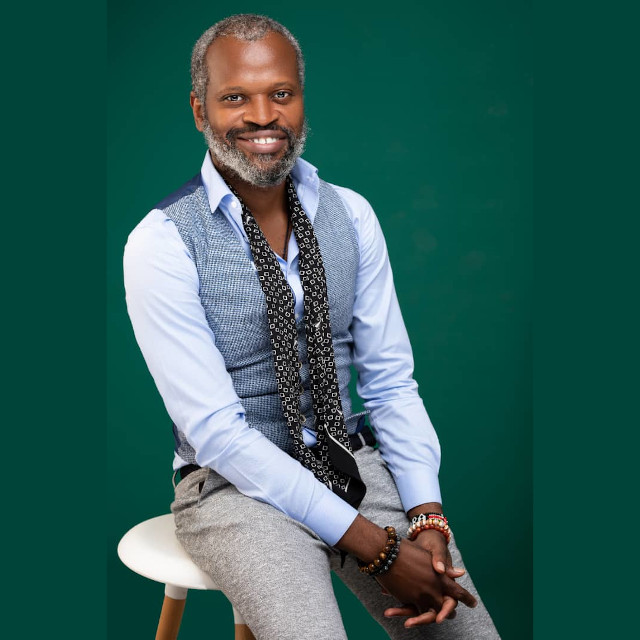
Founder · Doc/01John KamaraCEO · 2020—When my friend died last year, it was because he didn't have his health information with him and got the wrong treatment. It became clear to me that real-time access to your health data is the solution. So I built AfyaRekod — your own health data at your fingertips.
In March 2020 the COVID-19 pandemic forced AfyaRekod to compress its launch timeline. The platform was already being built around three radical ideas — patient ownership of records, geo-located health metadata, AI for early detection. The pandemic just collapsed the runway.
By May 2020, AfyaRekod had partnered with Telkom Kenya to roll out a real-time COVID-19 monitoring platform. The platform was hosted in Telkom's local virtual environment, accessible by smartphone via the Google Play Store and — critically — by every feature phone in Kenya through USSD code *380#.
It used blockchain and AI, converted structured and unstructured data using FHIR standards, and visualised infection clusters as heat maps so health workers could see where the virus was moving in real time.
Each year a thesis was tested in the open — never as a press release, always as a build. What follows is the documented arc, year by year, of what we said and what we shipped.
"Healthcare happens outside the hospital. Treatment happens inside the hospital."
This is the line we have repeated since 2020 — in podcasts, on stages, to ministries, to investors, to a Kenyan grandmother registering on USSD. It is not poetry. It is the architecture brief.
Most digital health systems were built around the institution: the hospital owns the EMR, the lab owns the result, the pharmacy owns the prescription, the insurer owns the claim. The patient sits at the center of every conversation but the data sits in silos the patient cannot see.
AfyaRekod inverted the topology. The patient becomes the index. The hospital becomes a node. The pharmacy becomes a node. The insurer becomes a node. The CHW becomes a node. Every system in the ecosystem can talk to every other system — but only because they all reference the patient first.
This is the difference between interoperability (systems agreeing to share) and mobility (the patient carrying their record across systems). Interoperability is a treaty between institutions. Mobility is a right held by a person.
AfyaRekod is not an app. It is a connected set of platforms — B2C, B2B, B2G, plus a community-health layer and an AI engine — bound together by a single patient index and the AfyaRekod Health Data Cloud.
A patient-centred platform that allows individuals to digitally store, manage, share and access their health records across the entire ecosystem. Available on web, Android, iOS and via USSD *380# for feature phones.
A modular web-based EHR / HIS with over 140 modules — from patient management and pharmacy to claims, pathology, vaccine management and AI point-of-care tools. Designed to scale from rural mission clinic to teaching hospital, with seamless interoperability via HL7 / FHIR / IHE.
Mobile + web tool for Community Health Volunteers — digitises NHIF / MOH forms, household demographics, visit summaries and surveillance data. Each CHW becomes a metadata agent on the live grid.
Connects healthcare providers to patients actively searching for services in their location. Push notifications, SMS, joint marketing, online appointments and orders — turning the patient base into a discovery surface.
Web-based insurance OS for the entire ecosystem — agents, brokers, hospitals, insurers, valuers, assessors, clients. Underwriting, claims, fraud detection, sales and customer service modules connected to live patient data.
The patient master index that every AfyaRekod surface plugs into — a health information exchange connecting health information owners (patients) to health information consumers (clinicians, governments, researchers). Built on HL7, FHIR and IHE; hosted across Microsoft Azure and AWS plus in-country servers for data residency. Compliant with WHO Health Data Governance Principles, Kenya DPA 2019, GDPR.
Moesha is the predictive AI engine inside Afya AI — built across six years of model rounds (v1 → v1.x → v2 → v3) on data we collected ourselves, geo-located, time-stamped, and qualified at the source. Most African AI work begins with a foreign dataset and ends with a foreign answer. We started with the data.
The architecture: a data ingestion layer feeds a metadata annotator; a model selector layer routes requests to the right LLM or classical model; a Multi-Agent System (MAS) coordinates across pods (GPT, BERT, LLaMA, Mistral and our own fine-tuned weights); a response handling layer returns interventions; a data lake retains everything for continuous training.
Underneath sits SMOKE — Stochastic Modeling and Optimization for Knowledge Extraction — handling data imputation, noise reduction and pattern recognition on the messy reality of African primary healthcare data.
* Lung & Skin cancer co-developed with Oslo University Hospital and Medioteq from April 2025
The AfyaRekod AI-Climate Healthcare Grid is the synthesis of five years of work — a live, geo-linked intelligence layer where Community Health Workers become metadata agents, climate signals overlay symptom clusters, and Moesha runs disease prediction at the village level.
A network of 100 CHWs visiting 500 households daily reaches roughly 1,500 people per day. Each visit produces structured metadata — symptoms, vitals, behavioral indicators — and unstructured signals — water source quality, pest infestation, sanitation. Every data point is geo-tagged, time-stamped, and tied to a person on a map.
Overlay that with climate metadata — temperature variability, humidity, AQI, vector ecology, flood and drought patterns — and Moesha can correlate environmental drivers with symptom spikes before either alone would have flagged anything. A red alert cluster appears in 72 hours instead of three weeks.
Identify rising symptoms (fever, sore throat, headache) across communities — not as totals, as spatial-temporal anomalies.
Overlay temperature, drought, flood zones, AQI and vector ecology with health symptoms — the climate-health correlation surface.
Spot localized outbreaks before they become regional crises. The COVID-19 lesson, productized.
Compare the cost of treating late-stage disease versus early detection at scale — early intervention can reduce costs 30–70%.
Geo-linked metadata cuts time from outbreak detection to response from weeks to hours.
The 2020 partnership that made AfyaRekod national infrastructure. Telkom hosted the platform, opened USSD *380# for feature phones, and gave AfyaRekod the reach to monitor COVID for Mombasa County.
Strategic partnership to integrate AfyaRekod into GE imaging equipment — pulling scan/image data directly into the patient portal so hospitals can read the data using AI.
The Association of the Sisterhood of Kenya — over 240 hospitals in network, with over 500 facilities reached. AOSK was where AfyaCare EHR matured: digitizing manual mission clinics, training nurses on the platform.
The National Council of Churches of Kenya MOU signed in 2025 — opening access to a network of 450 hospitals across Kenya. Faith-based healthcare is the largest non-government provider on the continent.
Color NGO partnership extending AfyaRekod's reach into a hospital network targeting the last-mile facilities — where data is most absent and where mobility-first architecture pays the highest dividend.
From 2023, AfyaRekod has been training Nigerian State Health Insurance Agency leadership — 27 of 36 state CEOs trained. The NHIA partnership is a beachhead into national-scale public health data.
County governments became the first paying B2G clients. Homabay County signed as first paying government client. Mombasa and Nandi anchored the original COVID-19 rollout.
Term sheet signed for an 18-month engagement starting April 2025, co-developing Lung and Skin cancer AI models from Norway with Medioteq. African data science exporting upstream.
Microsoft Azure and AWS for hosting and compute. InterSystems for clinical data fabric. The Africa Blockchain Centre and AICE Africa for AI capacity. NVIDIA AI program.
The hardest test for any technology company is not whether it survives the year. It is whether the world eventually agrees with the things you said before they were obvious. This is our public ledger.
"Patients should own their own health records. Hospitals are custodians, not gatekeepers."
Patient-controlled health data is now a stated objective of WHO digital health strategy, EU EHDS regulation, and most G20 health authorities.
"Build for the feature phone first. The patient in a rural village with a Nokia must access their record via USSD."
USSD-first health platforms are now standard practice in low-bandwidth markets. We launched *380# in May 2020.
"AI in healthcare in Africa requires us to collect our own data first. Foreign datasets produce foreign answers."
Sovereign AI and locally-trained medical models are now central to the WHO AI for Health agenda and the African Union AI Strategy.
"Data architecture should be mobility-first, not interoperability-first. The patient is the protocol."
Patient-centred FHIR architectures and personal health record portability are now the explicit direction of US ONC, EU EHDS, and Africa CDC.
"Geo-located metadata is the substrate of any real disease surveillance."
Spatial epidemiology and geo-tagged disease surveillance are now standard tooling at WHO, Africa CDC, and major public health labs.
"State health insurance leaders need structured AI training — they will be the operators of the next generation of health systems."
National regulators globally are scrambling to upskill on AI governance. We had already trained 27 of 36 Nigerian SHIA CEOs by 2023.
"Climate is a healthcare input. Temperature, humidity, AQI, vector ecology — these belong inside the disease prediction model."
The Lancet Countdown, WHO COP processes treat climate-health integration as a defining priority of the decade.
"Patients should be able to earn income from their own health data — with explicit consent, with traceable use."
Data dividends and consent-based health data monetisation are entering policy debate in the EU, US, and across Africa.
Most healthtech IP is software code. Our IP is software code plus a dataset gathered with explicit consent plus the methodology to produce more of it. This is what we hold.
Our individualised data-pod architecture. Each patient gets their own replicated data pod across our distributed nodes — so that data sovereignty is enforced at the storage layer, not the application layer. The patient's data fails over to the patient, never to the institution.
AfyaRekod's topology is star-shaped around the patient — every node communicates through the patient master index. The patient is not a row in a database. The patient is the database.
Since 2020, every data point captured on AfyaRekod has been geo-tagged and time-stamped at the source. 100% of our data has been geolocated — enabling links between Patient, Practitioner, Facility, and Place.
Our internal data processing layer for the messy reality of African primary healthcare records — handling data imputation, noise reduction, and pattern recognition.
A live predictive engine running 50+ disease models, integrating GPT, BERT, LLaMA and Mistral in a Multi-Agent System (MAS) network with our own fine-tuned weights. Built since 2019, shipping since 2020.
Methodology and pipelines that overlay temperature, humidity, AQI, vector ecology, flood and drought patterns onto symptom and patient data — producing correlation models nobody else in African healthtech is producing at this scale.
A trained network of Community Health Workers operating as metadata agents — collecting structured symptom, biometric, household and environmental data from 500 households per 100 CHWs per day.
A patient platform that runs on a teaching hospital's web SaaS, a doctor's iPad, a CHW's Android, and a grandmother's Nokia 105 via USSD. Solved in 2020 and refined since.
Endorsed adherence to WHO Health Data Governance Principles. Active compliance with Kenya DPA 2019, EU GDPR, US HIPAA. ISO/IEC 27001. The unglamorous IP — but the IP that closes deals with ministries.
AI in healthcare without consent is surveillance. AI in healthcare without geography is hallucination. AI in healthcare without the patient is theft. SafeAI means binding the model to all three.
Moesha matures into a constellation of SafeAI agents — bound by patient consent, traceable in their use of data, auditable in their recommendations. The agent is a clinician's tool, not a clinician's replacement.
A patient who owns their data should be able to license that data — with explicit consent — and receive value back. Data dividends as a real income line for African households.
Real-time tracking of drug usage and adverse events across geo-located cohorts — enabling truly personalised clinical trials, real-time pharmacovigilance, and inventory management calibrated to actual disease burden.
Insurance pricing built on actual longitudinal patient data, fraud detection on geospatial signals, claims processing automated against verified records — and microinsurance for the rural household.
The 65% of Africans who live in rural communities are the market. The CHW network, USSD, mobility-first architecture were all designed to make rural primary healthcare a first-class system. This is where the next generation is built.
An operating system for African public health — adopted at county, state, and national level, plugged into Africa CDC and WHO AFRO data flows, capable of detecting micro-pandemics in 72 hours. The work of the next decade.
We started AfyaRekod in 2020 because a friend died from a missing record. Six years later we have built the substrate of a patient-driven healthcare system across five countries, trained the leaders of public health agencies, deployed AI models that work on data nobody else collects, and proven — in counties and clinics and Nokia keypads — that the future of African healthcare is mobile, geo-located, AI-native, climate-aware, and held in the hands of the patient.
We have not been the loudest. We have been the most consistent. The thesis we wrote in 2020 is the thesis we ship in 2026. The conviction has not shifted. Only the world has caught up.
We are on a journey to digitise healthcare across Africa.
The journey continues.
John KamaraFounder & CEO
Bendon MurgorCo-Founder · CTO
Irene KiwiaCo-Founder
Dr. Ronald HarrisCo-Founder · Board